How to Do a Brain Dump by Talking Instead of Writing
A brain dump is a fast, unfiltered capture of everything currently open in your head: tasks, worries, half decisions, and things you owe people. You do not sort it. You do not judge it. You get it out of working memory and into a place you can look at later, so your attention is free again.
Here is the part almost nobody says out loud. A brain dump is a monologue. It has the shape of someone talking: loose, repetitive, jumping sideways, circling back.
And writing is the slowest possible way to record a monologue. If you have ever finished a page and felt like the good version was the one you thought before your hand caught up, that is not a discipline problem. That is a bandwidth problem. This guide shows you how to do a brain dump by talking instead, in about three minutes, and how to still find it six months later.

What a brain dump is, and what it is actually for at work
Most articles on this topic are written for a planner spread or a quiet evening journal. This one is not. The brain dump meaning that matters here is narrower and more useful: it is a work practice for a Tuesday afternoon when you have too many open loops and not enough room to think.
An open loop is anything your brain is still holding because it has nowhere else to live. The invoice you have not sent. The teammate who asked you something on Monday. The decision you made in the shower and told nobody about. None of these are hard. They are just resident, and each one costs a little attention.
A brain dump evicts them. You say every open loop out loud, in whatever order it arrives, until the list stops producing new items. Then you stop.
What you get is not a plan. It is raw material for a plan, which is a different and much cheaper thing to produce. That distinction is why the practice works at all: planning is slow and demanding, while dumping is fast and requires nothing from you but honesty.
Done well, it takes three minutes and you do it standing up. Done badly, it becomes a forty minute journaling session that you dread and quietly stop doing by Thursday.
Timing matters less than frequency, but two slots work best. The first is the end of the working day, when the loops are loudest and you want them out before the evening. The second is right before a block of focused work, because a dump clears the desk that deep work needs.
Twice a week is a sensible floor. Daily is fine if the sessions stay short, and anything less than weekly tends to make each dump long enough to feel like a chore.
Why most brain dumps fail, and both reasons are about mechanics
The brain dump method gets recommended constantly, and most people who try it drop it within two weeks. The usual explanation is that they lacked consistency. That is rarely true. There are two mechanical failures, and neither is a character flaw.
Failure one: writing is slower than thinking, so the dump is already lossy
Most people type somewhere around 40 words per minute. Most people speak at more than triple that in ordinary conversation. Thought runs faster still.
So when you write a brain dump, there is a queue. Item four is waiting while you finish item three, and by the time you look up, item four has quietly left. You did not forget it because you were careless. You forgot it because you throttled the input.
The gap is measurable. A Stanford, University of Washington and Baidu team compared speech input against typing and found English text entry roughly three times faster by voice, with about 20 percent fewer errors. Their test used phone keyboards rather than a full desktop keyboard, so treat that ratio as a general indication of the gap rather than a promise about your own setup. The direction, though, is not really in dispute by anyone who has tried both.
The point of a brain dump is completeness, not craft. Any input method that makes you slow down is working against the only thing the exercise is for.
Failure two: the finished dump is a dead page
This one is worse, and almost nobody writes about it. You do the dump. It helps. You feel lighter for an hour.
Then the page goes into a notebook, or a file called notes.txt, or a doc named Untitled 7. You never open it again. Six weeks later you have the same thought for the fourth time, because the first three captures are sitting somewhere you cannot search.
A brain dump you cannot retrieve is a form of forgetting with extra steps. Capture is only half the practice. The other half is retrieval, and we will come back to it in detail.
How to do a brain dump by talking: the three minute version
Here is the whole process. It is short on purpose, because a practice you can do in three minutes is a practice you will actually repeat.
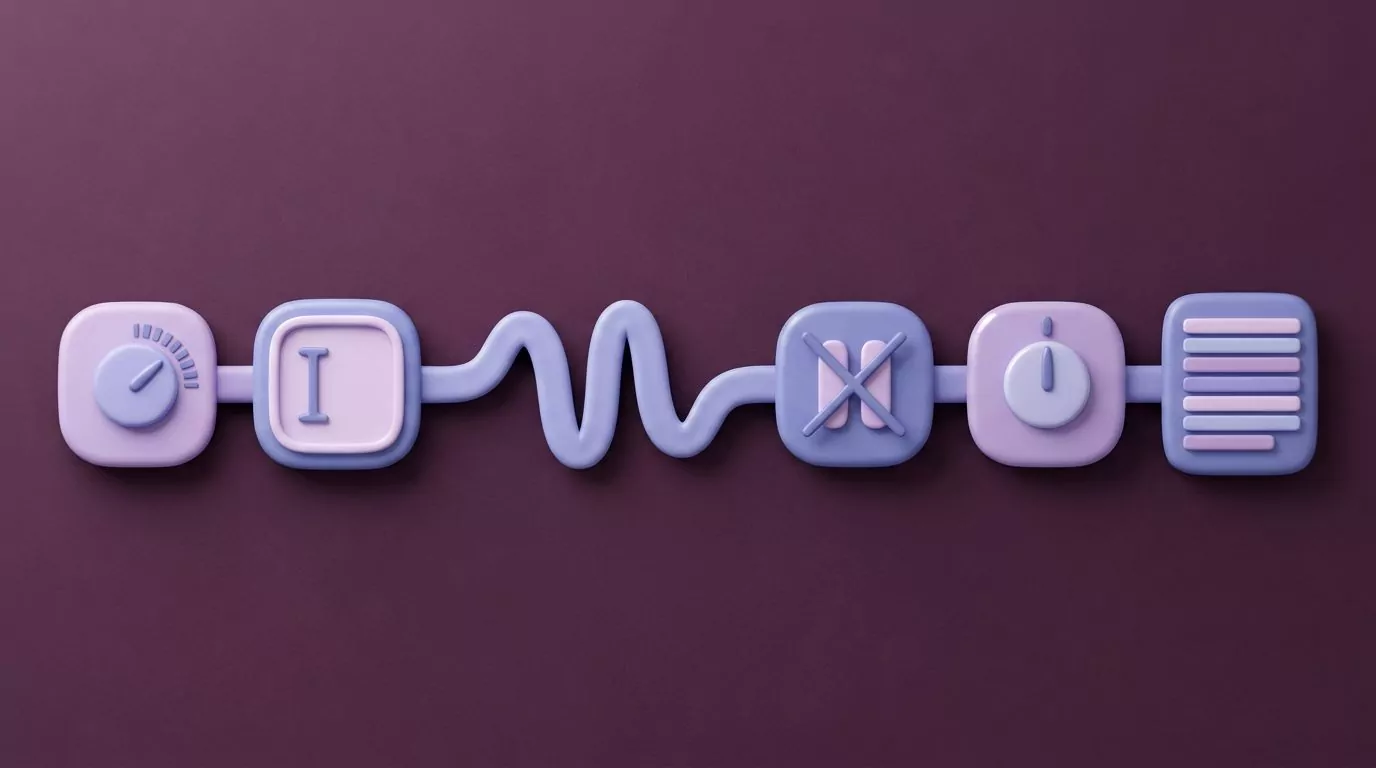
- Set a timer for three minutes. The timer is not there to rush you. It is there to promise your brain that this ends, which is what makes it possible to start.
- Put the cursor somewhere. Anywhere. A blank note, a scratch file, a message to yourself. It genuinely does not matter, because you are not going to look at this window while you talk.
- Start talking before you know what you are going to say. Open with the dumbest, most obvious thing on your mind. The obvious item is a door handle, and the rest follows it out.
- Do not stop to organize. No categories, no priorities, no going back to fix a sentence. If you catch yourself tidying, you have switched tasks and the dump is over.
- Stop when the timer stops. Even mid sentence. You can always run another three minutes later, and knowing that keeps the exercise cheap.
Both desktop platforms ship something you can try this with today. Apple documents how to turn on Dictation on a Mac, and Microsoft covers voice typing on Windows. Both are free, both work in most text fields, and both are a reasonable way to find out whether talking suits you before you change anything else.
What you will notice quickly is where the friction sits. Built in dictation tends to give you a wall of unpunctuated text and leaves you to clean it up, which reintroduces exactly the editing tax the exercise was meant to avoid. Tools built for this loop handle that differently. VoiceSnap Pro, for example, is a hold to talk shortcut for macOS and Windows: you hold your chosen key, talk, release, and punctuated text with paragraph breaks appears at the cursor with fillers like "um" already removed. There is also a separate notes shortcut for when you have nothing to dictate into at all, which is the common case for a dump.
What to say when your head goes blank on demand
The most common objection to speaking a dump is real: the moment you press the key, your mind is a clean white wall. This happens with writing too. It is just more embarrassing out loud.
The fix is a fixed set of prompts. Treat the five below as a brain dump template you say to yourself in order. Do not answer them thoroughly. Answer them fast and move on.
- What is unfinished? Anything started and not closed, however small.
- What am I dreading? The dread items are usually the ones eating the most background attention.
- What did someone ask me for? Requests you accepted and have not delivered are the loudest open loops there are.
- What did I decide and not tell anyone? A decision nobody has heard is not yet a decision.
- What is due this week? Deadlines last, because they are the easiest to recall and would otherwise crowd out the rest.
A quick brain dump example of how that sounds in practice, said at normal speed and not tidied up: "Unfinished, the pricing page copy is half done, I still have not replied to the contractor about scope, the tax folder is a mess. Dreading, the call on Thursday, mostly because I have not decided what I want out of it. Someone asked me, Priya wants the deck outline by Friday, and I said yes on Monday and have done nothing."
That is thirty seconds and it is already more complete than most written dumps get in five minutes. It reads badly. It is not supposed to read well. It is supposed to be complete.
Cleaning up afterwards: from monologue to a list you can act on
Dictated prose needs a different kind of edit than typed prose, and getting this wrong is what makes people give up on voice.
When you type, you edit as you go, so the draft arrives half polished and you are tempted to keep polishing. When you talk, nothing is polished, and the temptation is to rewrite the whole thing into something presentable. Resist that. You are not producing a document.
Use one pass, and only one:
- Cut the connective tissue. Spoken text is full of "so anyway" and "the thing is". Delete on sight.
- Break the wall into lines. One open loop per line. This is the only structural change you make.
- Mark the three that matter. Not a priority system. Just three.
- Leave everything else exactly as spoken. Ugly phrasing is fine. Nobody is reading this but you.
That pass takes about two minutes. If it is taking longer, you have started rewriting, which is a different activity wearing the same clothes.
What happens after the dump is where most people lose the thread, so it is worth seeing someone walk through it end to end.
Finding the dump again in six months
This is the half of the practice that nearly every guide leaves out, and it is the half that decides whether the habit survives.
Think about what you are really building. Do this twice a week for a year and you have roughly a hundred snapshots of what you were worried about, what you owed people, and what you decided. That is a genuinely valuable record, and it is worthless if you cannot get back into it.
Filing does not solve this. You will not name these notes well, because naming a dump means reading it, and you dumped it precisely so you could stop thinking about it. Folder systems fail here for the same reason.
Full text search does solve it, but only if the text is stored somewhere searchable. This is the practical case for keeping dumps in a single searchable place rather than scattering them across scratch files. Any decent brain dump app should let you find a note by a phrase from inside it, not by a title you never set.
It also helps if capture and storage are the same action. In VoiceSnap Pro every dictation is saved automatically as a note tagged with the app and the time, grouped by day, so a Tuesday afternoon dump is findable later by any phrase you actually said. Notes export as plain text or Markdown when a dump turns into a task list or a doc. Worth knowing on the privacy side: audio is transcribed and then discarded, so there is no recording to replay, only the text.
There is a small habit that makes retrieval much easier: search for the words you would have said, not the words you would have filed under. You never labeled that afternoon "Q3 pricing". You did say "the pricing page copy is half done", and that is the phrase your future self will reach for.
Whatever you use, the test is simple. Six months from now, can you type a half remembered phrase and land on the right afternoon? If the answer is no, you are capturing into a drawer.
Spoken versus written brain dumps, compared honestly
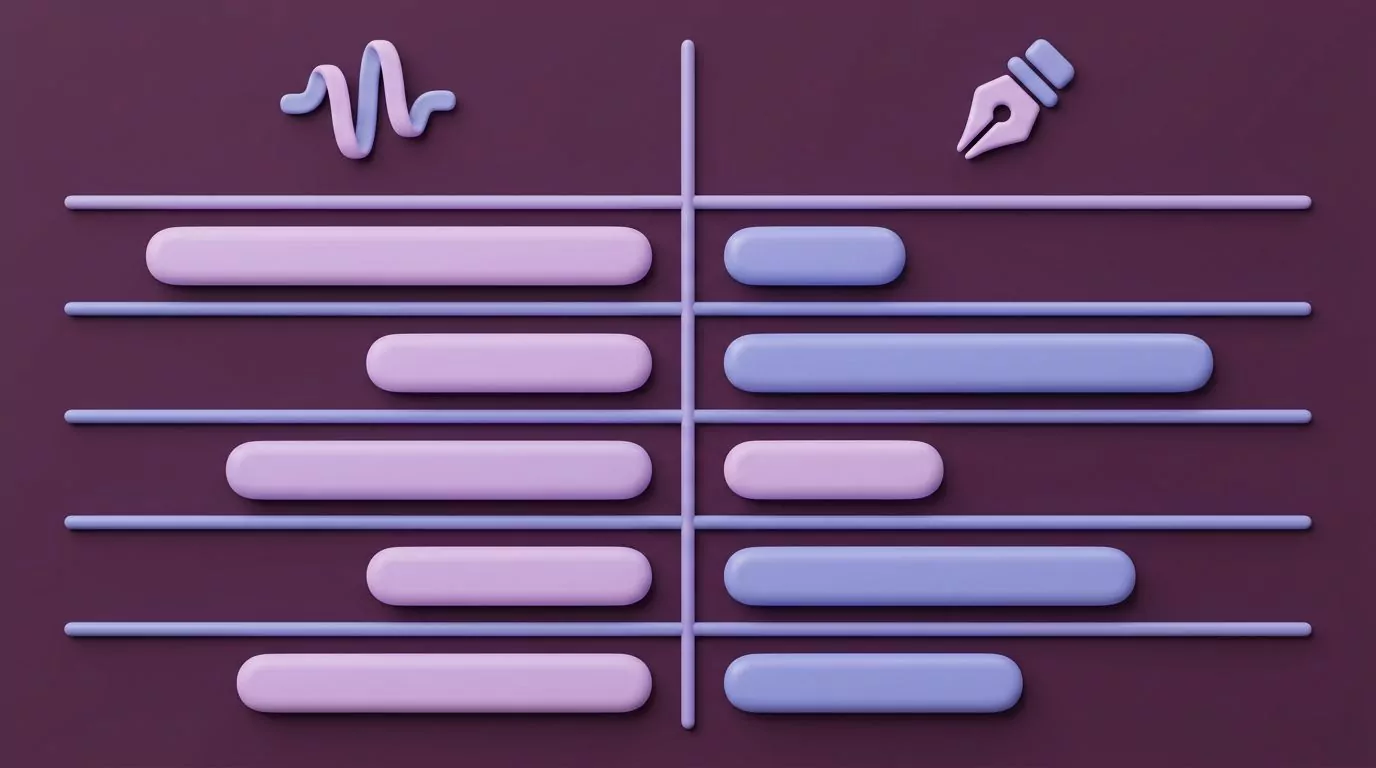
| Factor | Spoken brain dump | Written brain dump |
|---|---|---|
| Speed of capture | Roughly conversation speed, so the input rarely lags the thought | Limited by typing or handwriting speed, which is well below thinking speed |
| How lossy it is | Low, because items do not sit in a queue waiting to be recorded | Higher, since items expire while your hand catches up |
| Editing cost | One cleanup pass afterwards, and the raw text is messy | Lower, because you self edit while writing |
| Searchability afterwards | High if stored as text in one place, since every word is searchable | Zero on paper, and mixed in files you have to name and find |
| Where it lives | Wherever the text landed, so a single library is worth setting up | Notebook, planner, or a scattering of untitled documents |
| Cost to start | Free with built in dictation, and paid tools add cleanup and search | Free, and a pen already works |
The honest summary: speaking wins on capture and retrieval, writing wins on immediate tidiness, and if you never revisit your dumps then the difference between them barely matters.
When paper is still the right answer
Voice is not always better, and pretending otherwise would be silly. Paper genuinely wins in several situations.
When the thinking is spatial. Arrows, boxes, clusters, and things circled twice do not survive a linear transcript. If you need to see relationships between items rather than list them, a page beats a paragraph every time.
When you are sketching, not listing. A brain dump journal that mixes diagrams with words is doing something speech cannot do at all.
When you are not at a desk. Dictation tools like the one described here are desktop software for macOS and Windows, with no mobile version, so a notebook covers you on a train or in a corridor.
When you are not alone. Talking to yourself in an open plan office is a real constraint, not an imagined one. Headphones and a quiet corner help, but sometimes paper is simply the polite option.
A reasonable setup is to use both: speak the routine dumps because they are frequent and boring, and reach for paper when the problem is shaped like a diagram.
Frequently Asked Questions
What is a brain dump?
A brain dump is the act of getting every open thought out of your head and into an external place quickly, without sorting or judging any of it. The goal is to empty working memory so your attention is free, not to produce a finished plan. Sorting comes later, if at all.
How long should a brain dump take?
Three to five minutes is plenty for a routine one. Longer sessions tend to drift into planning or journaling, which are useful but different activities. If you regularly need more than ten minutes, you are probably dumping too rarely.
What is the difference between a brain dump and brainstorming?
The brain dump versus brainstorming distinction comes down to direction. A brain dump empties what is already in your head, so it is retrieval. Brainstorming generates things that were not there yet, so it is production. Dumping is usually solo and unstructured, while brainstorming is often collaborative and aimed at a specific question.
Should I brain dump on paper or on my computer?
Paper is better for spatial thinking, sketching, and any moment you are away from a desk. A computer is better when you want the dump to be searchable later, which matters more than most people expect. If you want both speed and searchability, speaking into a text field on your computer is the fastest route.
What do I do with a brain dump after I finish it?
Give it one short cleanup pass: cut the filler, break it into one item per line, and mark the three items that actually matter this week. Then move those three somewhere you will see them, and leave the rest alone. Do not try to process every line, because most of them only needed to leave your head.
Start with three minutes
Pick a timer, put your cursor in any blank field, and talk for three minutes about what is unfinished. That is the entire practice. Everything else in this guide is refinement on top of that one habit.
If holding a key and talking sounds better than typing it out, VoiceSnap Pro is in pre launch for macOS and Windows, with early access at $39 one time through the waitlist. It is worth trying the free built in dictation on your own machine first: if you find yourself dumping more often once talking is an option, that tells you most of what you need to know.